Top
Go Back On
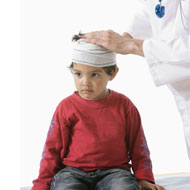
Head injuries in toddlers and young children are not that uncommon a phenomenon. These tiny tots constantly bump their heads against something or the other, particularly when they are just beginning to walk, crawl or roll over. Although most head injuries in toddlers are minor, this does not eliminate the need to get worried.
It is crucial to look for signs and symptoms of serious injuries, as if ignored this condition could have serious health implications. It may be astonishing to note that toddlers and young children suffer from more head injuries than adults. One main factor which contributes to this statistic is that toddlers unlike adults are unable to control the movements of their head.

Additionally, unlike adults the muscles in their neck have not developed entirely and the size of their head is disproportionately larger in relation to their body size.
Furthermore, apart from having disproportionate heads, toddlers and young children also have legs that are relatively short when compared to the rest of their body. This is why a toddler's center of gravity is closer to his or her head. Head injuries such as nicks, cuts, bumps and scrapes generally heal fast, and can be treated just like any other abrasion on the body. These are minor injuries that most often do not call for any kind of medical attention. Injuries that are of a more serious nature, are brought about due to abuse (head injuries that are inflicted) or when the child has a fall. The greater the amount of force involved in the injury, greater is the seriousness of the injury.
Toddler head injury symptoms include the following; loss of consciousness, breathlessness, skull deformity such as a sunken part, open wound, seizures, severe bleeding, extreme sleepiness or a difficulty while waking up, confusion or abnormal behavior being displayed, slurred speech or difficulty while speaking, stiff neck, vomiting and nausea, and unsteadiness. If in case you notice any of these toddler head injury signs, consult your child's pediatrician immediately. Severe injuries to the head, if ignored or if treatment is delayed, can lead to permanent brain damage. After an injury, it may be difficult to differentiate between a major and a mild brain injury. The child needs to be monitored constantly for about 24 hours to see if any of the above mentioned symptoms are displayed. Toddler head injury treatment will depend on the symptoms as well as the severity of the injury.