Top
Go Back On
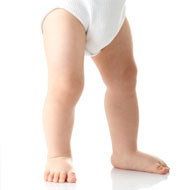
A toddler fracture is the term given to a spiral fracture of the shinbone in young children under the age of 5 years. A toddler fracture is commonly experienced by toddlers and kinder garteners.
It takes place when the toddler is running and happens to lose his or her balance or steps on something and falls down in an awkward manner with most of the child’s weight coming down on a particular part of his leg. This may result in an abrupt convoluting of the tibia (shin bone or leg bone) and may result in a fracture of a spiral pattern.
Toddler’s fractures are usually difficult to detect on x-rays and in most cases, a CAT scan of the bone may be required to display the exact location of the fracture. Over a period of time, the location of the fracture will be perceptible as healing commences and the new bone takes shape to mend the fracture.
Among toddlers, the skin and hypodermic tissues are extremely fragile especially over the anterior and central tibia and due to this most toddlers are vulnerable to developing toddler’s fracture. Some toddler fracture symptoms include: anguish, inability to walk, modest puffiness or tenderness and inflammation over the fracture, and discomfort when the location of the fracture is compacted. Toddler fracture treatment calls for a long-shanked cast to be placed on the leg to palliate the painful symptoms and ensure speedy recovery and faster healing. Fortunately, healing is quick and usually takes place within a span of 3 to 4 weeks.
In order to prevent toddler’s fractures, it is important to make sure that the area or playground meant for children is free of stones and protrusions from the ground. It is also important to have a sand pit below the jungle gym as this will help to cushion a fall and will prevent serious injuries. The sand in the pit will have to be cleaned regularly and raked and tossed often to ensure that it remains loose. You will also have to teach your toddler not to run down stairs as this is a very common cause of toddler fractures. Toddler’s are very energetic and will tend to run around the house. Make sure that you do not leave small objects lying around as this could cause him/her to trip and fall. Children should be taught to put all their toys away once they are done with their games and to ensure that their play area or room is free of clutter on the floor. Instilling such habits from a very young age will go a long way in preventing accidents.
Due to their very nature, toddlers are prone to fractures and other injuries. They tend to be hyperactive as they learn to walk. Since their bones are in developing stage, their bones are softer and easily get fractured even with minor falls such as from the bed. Usually, hand or leg bones are more prone to get fractured in toddlers and small kids.In order to guard your baby against any injury or fracture, you need to be very vigilant and keep an eye on his/her movements. Never leave your child unattended on the bed or any such place alone.
In many cases, parents do not come to know immediately after the fracture has occurred to their baby. They take it as just a minor fall. Further, the baby does not show any such obvious signs of a fracture. He/she may simply stop crying after sometime, and the parents feel that no major injury has taken place.Sometimes, it is even very difficult to detect fractures in small babies. You may come to know about the fracture, only when some of the later symptoms start appearing, such as swelling in the fractured leg or hand. As soon as you detect any thing of the sort, you must rush to your pediatrician for immediate medical attention.
Although fractures in toddlers are minor, but timely medical aid is necessary.
The good thing is that toddler fracture recovery is very fast and s is much lesser as compared to that for children and adults. This is because the bones of young kids are still in the developing stage. This is why toddler fracture recovery is much faster if detected early and if immediate treatment is given. The toddler fracture recovery usually takes only about two weeks.
The details of both hand and leg fractures in toddlers are mentioned separately in the following paragraphs.
Tibia, which is the shinbone, connects the knee and ankle bones. It is the larger and stronger of the two leg bones in the human body and bears most of the body weight. Most toddlers fracture their tibia due to falls from the bed or chairs and tables.The symptoms of toddler fracture of the tibia include severe pain and swelling in the leg and difficulty in shaking the toes.Toddler fractured tibia treatment is more or less similar to other fractured bones. Plaster is applied on the leg up to thigh. Usually, no medicines are administered for the treatment of fractured bones, and the toddler’s fractured tibia heals on its own within a span of two weeks or so.
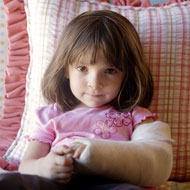
The cause of toddler arm fractures is the same as that of other fractures, typically fall from the short heights such as sofas, chairs, or the bed. Usually, toddlers fracture their wrist or elbow when they try to break their fall with their hands, which is a natural response to falling. Like any other fracture, the symptoms of toddler arm fracture include pain and swelling. After a fall, you should ask your toddler to move his/her fingers. If he/she is unable to or finds difficulty in moving the fingers, it could be a possible sign of a fractured arm. Sometimes, the symptoms may appear a few days after the injury, as in the case of a minor hair line fractures.If you find that your baby is having difficulty in moving his/her hands, you should closely observe for the symptoms of a fracture. If you find it difficult to ascertain whether or not there is a fracture, take your child to an orthopedic specialist for proper diagnosis.You should never ignore such an occurrence or it may lead to serious complications.
A toddler’s fractured elbow will take longer to heal as compared to the toddler’s fractured wrist. This is due to the reason that the nomenclature of elbow joint is such that it hurts the adjoining areas of the elbow joint much deeper.Treatment of toddler arm fracture also involves firmly bandaging the broken arm. Minor or hair line cracks may take one week to completely heal. If the fracture is more intensive, it may take two to three weeks. However, time taken for toddler fracture recovery may vary from child to child, depending on his/her specific health conditions. If a child has deficiency of calcium in the body, oral calcium supplements are administered for enabling quick healing of the fractured bone as it is calcium that is required to fill the gap between broken parts of the bone.
The best thing to do for preventing any such mishaps is to stay alert and keep an eye on the movements of your child. Also, never leave your child unattended. You must consult your doctor as soon as you feel that something maybe wrong with your child.