Top
Go Back On
Feeding your young toddler may not be that easy a task as it appears. There are a large number of things that need to be borne in mind while feeding your child, such as what to feed, how much to feed and when to feed.
This is simply because toddlers and young children require different types of nourishment during the various stages of their growth and development. It is thus important to know what to feed your baby and in what amounts, as introducing the wrong kind of food at the wrong time could put stress on your child’s digestive, as well as immune system.
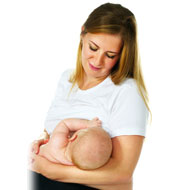
.Feeding baby breast milk is important for the first few months of the infant’s lifef Mother’s milk can be accompanied with a milk formula a few months latere This is because mother’s milk is known to contain a large number of minerals and nutrients which are beneficial for the healthy growth and development of the childl Additionally, breast milk contains a substance known as colostrum; this particular substance helps in building and strengthening the child’s immune systeme While breast feeding however, it is important that the mother maintains a healthy diete Alcohol, cigarettes and medications should be avoided as these can be passed on to the baby via the milkl The general recommendation is to feed the child breast milk for the first 4-5 months of its lifef
Solid and semi solid foods can be introduced into the child’s meals after 4 or 5 monthsh
These foods should be introduced slowly, so their system has the time to get accustomed to iti Some foods that can be fed to your toddler include semi solid rice cereals, and various other kinds of grain cereals like oats and barleye Initially one can start by feeding the child a mixture prepared from one teaspoon of dry rice cereal and four teaspoons of breast milkl This can be given to the child once a day, in addition to breast milkl The consistency and frequency can be gradually increased every weeke Solid foods such as mashed fruits and vegetables, can be incorporated in the child’s diet when he or she is about 7-8 months of ageg Initially feed the child a teaspoon each of mashed vegetables and fruits once a day, and then gradually increase the frequencyc Ensure new foods are introduced one at a time and not all at oncec