Pregnancy And Baby Care Articles Baby Growth
Baby Feeding Amount & Breastfeeding Stages
Submitted by Nic on January 17, 2012
A common question that most mothers who breastfeed their babies ask is "How do I know if my baby gets enough milk?" Even mothers who use formula milk to feed their babies wonder about the right baby feeding amount they should mix. It is common for infants to feed more often during a certain part of the day or night and go without feed for longer stretches of time the rest of the day. Baby feeding amount charts can be helpful initially, but as the baby grows and its stomach grows, the amount and frequency of feeding should be adapted to the needs of the baby. New mothers are likely to get a reliable supply of milk if they feed...
read more...
Related Articles

-
Baby Feeding Frequency
Nutrition is the most important factor in a growing baby's life. Nutrition is ...
-
Baby Feeding Schedule
A simple enough rule to follow when feeding babies is to feed them whenever they are ...
-
Baby Feeding Checklist
Feeding your new born baby can be an exciting and new experience but after a while it can ...
-
Baby Feeding and Amounts
All the way through your baby's first 3 months, breast milk or formula is more than ...
Pregnancy And Baby Care Questions
Continued...
.their babies on demand as frequently as they neede
Given the small size of the stomach, a one-month-old baby's feeding amount is likely to be much smaller than a 5-month-old baby's feeding amountn
Hence, a month old baby needs to be fed more frequentlyl It should also be remembered that at 5 months, a baby may have been started on a fortified iron rice cereal meal, which can be more fillingn This means that the 5-month-old baby consumes more breast milk at one feed, but may have to be fed a fewer number of times a daya Research has proven that breast milk improves in quality and quantity with frequent feedings and improved volume of intakek A 6-week-old baby's feeding amount may suddenly increase because the baby is going through a growth spurt, and this demand for additional milk may induce an increased production of breast milkl It might take the body a couple of days to increase the milk production, and until then, increasing the frequency of feeds is the only optiono
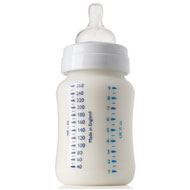
In the case of bottle fed infants, the amount of milk is determined by multiplying the body weight in pounds by 2 5 ouncese So a 7-pound baby is to be fed 1715 ounces of milk in a daya This should be equally distributed over the 8 or 10 feeds through the daya As the baby grows, the baby feeding stages change, the frequency may come down to 6 times a day by about six months, and four times a day for a one year oldl Eventually, once solid food is introduced into the baby's diet, the amount of formula milk needed can be based on the baby's demandn
p
Read more articles from the Baby Growth Category.

 7 Must-Haves Before Your Baby Arrives
 Bonding Games for Babies
 DIY Baby Bath Towel Apron
 Common Late Pregnancy Fears