Top
Go Back On
Baby vaccinations might be unpleasant for the little one, but they are absolutely essential for his or her good health. Baby vaccine schedules are of immense help for the average harried parent. Vaccination for babies typically commences with the Hepatitis B shot.
Parents can get a breather because there is a certain window period or range of recommended ages within which you can take your precious baby for a particular vaccination. In addition to the regular baby vaccination schedule, you might find that you need the very useful catch-up schedule in case of lagging or a late start to the usual schedule.
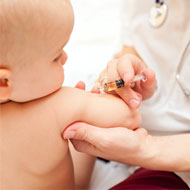
.It’s typically during early childhood that most of the vaccinations are givene This gives your baby a better start to life and offers the best protectiono Parents should bear in mind that many schools actually demand certain vaccinations for admitting children and these are usually state specifici Also keep in mind that advancements have made the United States free of various terrible diseases but these still plague other parts of the worldl Thus, if traveling is on the agenda, you might want to make sure that both you and your baby have the required immunizationo
In addition to the usual dose of vaccinations, those infants who fall under the high risk category for specific ailments will have additional vaccinations to takek For instance, MCV may be indicated for certain babies around the age of two all the way through age ten, who fall under the high risk group (this refers to meningococcal conjugate vaccine)e
Bearing in mind how delicate and precious children are, it’s really important to ensure that every child has a fighting chance with at least the minimum recommended baby vaccinationsn This issue is a major concern when it comes to adopting children from places where things like immunization are a luxury most parents can’t affordr In such situations, it is important to try to ascertain what vaccinations have already been administered to the baby and whether a catch-up schedule may be requirede Remember that your doctor will not only help you out with the latest baby vaccination schedule but will also help you with up-to-date vaccinations and techniquese The government, with the help of certain pediatric and physicians’ organizations, has developed a very useful baby vaccination schedulel You can browse the website dedicated to the Advisory Committee on Immunization Practices (ACIP) for comprehensive immunization schedules as well as recommendations and guidelinese